What is a call number?
In the library world, the term "call number" can be defined as a unique address for any item held by the library, with specific characteristics in its formulation. Every physical item in the library is assigned a call number that pinpoints its location on the shelf.
What system do we use?
Here at the Peter Jay Sharp Library, we currently use two systems.
For scores, we use a modified version of the Dewey Decimal System. In a nutshell, the Dewey Decimal System is grouped into ten main subject buckets, denoted by a 3 digit range (e.g. 000-099, 100-199, etc.). Further subdivisions within each bucket are done by the use of decimals. Our scores fall in the 780-789 range of the Dewey Decimal System.
For books, we use the Library of Congress Classification System (LC). This is the standard organizational scheme in academic libraries. LC is divided into twenty-one main subject buckets, denoted by a letter A-Z. Further subdivisions within each bucket are done using a combination of letters and whole numbers (e.g. AC1-AC1100, ML1-3930, etc.). The majority of our books lie within the ML and MT class.
How to read a call number
Call numbers should be read from top to bottom. Each level of the call number, or "cutter," represents a higher level of specificity to the item's location.
Both the Dewey class and the LC class should be read as a whole number (e.g. 785.13 comes before 785.3, ML128 comes before ML3506, etc.).
Following the initial Dewey or LC class, the call number can have anywhere from 2 to 5 cutters. Most cutters will have a letter followed by a series of numbers that represent a specific word (e.g. M939 is "Mozart"). These alphanumeric cutters should be read as decimals (e.g. M939 comes before M96, E7644 comes before E765, etc.).
The first of these cutters can be either: the surname of the main contributor (composer or author), the topical subject (used in biographies and other special book categories), the first word of the title proper (without initial articles), or "A1" (denoting a score anthology).
The subsequent cutters can include the preferred title, enumeration, publisher, date, and/or editor. The combination of these varies based on the item type.
| 786.4 | → | Dewey class, "Solo piano music" |
| B415 | → | Author surname cutter, "Beethoven" |
| S69 | → | Form cutter, from the preferred title, "Sonatas" |
| no.29 | → | Enumeration cutter, preferred by Library of Congress, "no. 29" |
| Bar | → | Publisher cutter, "Barenreiter" |
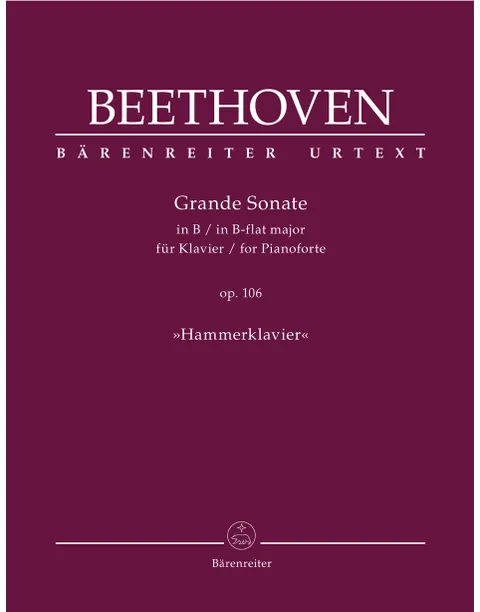 Grande Sonate : in B für Klavier : op. 106 = in B-flat major for pianoforte
by
Grande Sonate : in B für Klavier : op. 106 = in B-flat major for pianoforte
by
| 784 | → | Dewey class, "Secular vocal music" |
| A1 | → | Cutter denoting anthology |
| B725 | → | Title proper cutter, "Boosey & Hawkes opera anthology" |
| B&HMez | → |
Publisher cutter, "Boosey & Hawkes," with voice part attached, "Mezzo-soprano" |
 Boosey and Hawkes opera anthology - Mezzo-Soprano
by
Boosey and Hawkes opera anthology - Mezzo-Soprano
by
| ML | → | LC Class, "Literature on music" |
| 3506 | → | LC Sub-Class, "General history and criticism of jazz" |
| .R676 | → | Author surname cutter, "Rochinski" |
| 2022 | → | Year of publication, "2022" |
 Modern jazz theory and practice : the post-bop era
by
Modern jazz theory and practice : the post-bop era
by
Physical sound recordings are classed first by type (e.g. CD, Tape, LP), then by accession number (i.e. a sequential number assigned to each item as it is added to the collection)
| CD | → | Item type |
| 30033 | → | Accession number |
Our electronic resources do not have call numbers.
To browse digital books, scores, and MSM concerts, you can search our catalog by item type


